Diarrhoea may look simple, but in children it can become serious quickly. This article helps parents understand dehydration signs, prevention steps, and when a child should be taken to hospital.
Diarrhoea is common in children, but it should not be ignored when it is severe, repeated, or combined with vomiting, fever, or weakness. Children can lose fluids faster than adults, and dehydration can happen quickly if the child is not able to drink enough.
Diarrhoea may be caused by contaminated food or water, viral infections, bacterial infections, poor hand hygiene, or other stomach illnesses. In some cases, it may also be linked to wider community infections or waterborne disease.
The most important thing for parents is to watch for dehydration. A child may be dehydrated if they have dry lips, dry mouth, sunken eyes, no tears when crying, reduced urination, cold hands or feet, unusual sleepiness, or if they are unable to drink properly.
Parents should encourage fluids, but if the child keeps vomiting, refuses to drink, becomes very weak, or has blood in the stool, medical care is needed. Random medication should be avoided unless advised by a healthcare professional.
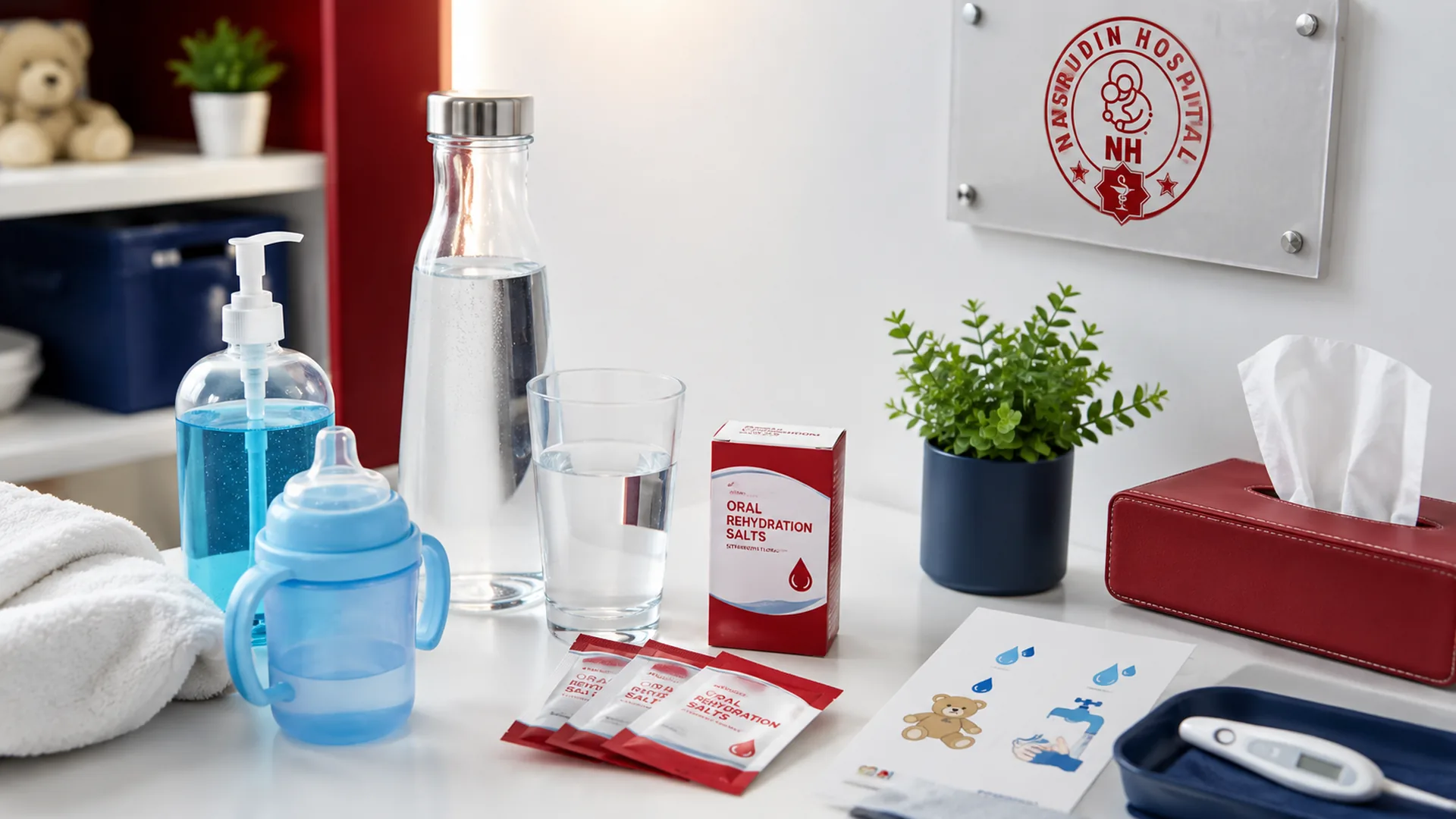
Prevention starts with simple daily habits. Washing hands with soap, drinking safe water, preparing food cleanly, storing food properly, and keeping children away from unsafe water can help reduce the risk of diarrhoea and infection.
Children also need good nutrition while recovering. Unless a doctor advises otherwise, feeding should continue because the child needs strength and energy to recover.
At Nasrudin Hospital, our team checks children for dehydration, identifies possible causes, and provides the right care when needed. Early treatment can prevent complications and help parents feel more confident about their child’s recovery.
Warning Signs
Please bring your child for medical care if you notice:
- Dry mouth or lips
- Sunken eyes
- Reduced urination
- No tears when crying
- Repeated vomiting
- Blood in stool
- Severe weakness
- Child unable to drink
Diarrhoea and dehydration can become serious in children. Early care, safe water, hygiene, and proper medical support can help protect children and families.
Medical Disclaimer
This article is for general health education only and does not replace medical advice. If your child is unwell or symptoms are severe, please contact Nasrudin Hospital or visit a qualified healthcare professional.